


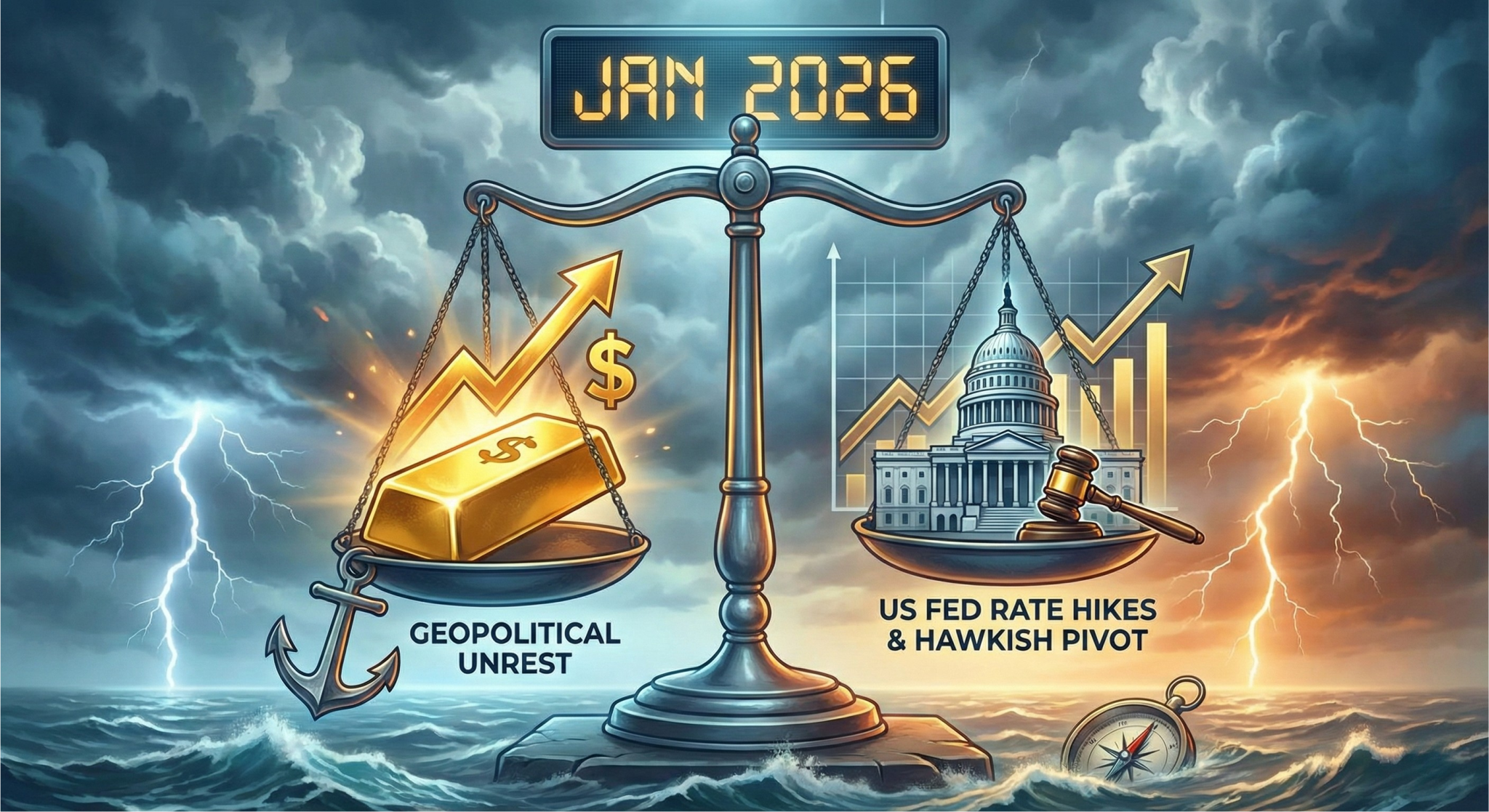
Gold price in January 2026 surprised even experienced traders. Despite elevated US interest rates and a hawkish Federal Reserve tone, gold refused to collapse. From my day-to-day experience trading gold, January marked a clear shift in how the market now reacts to monetary policy.
This was not a normal interest-rate cycle. It was a month where expectations broke, confidence weakened, and gold started trading less like a commodity and more like insurance.
( The analysis and information provided in this article and the website are for educational and informational purposes only and do not constitute financial, investment, or trading advice. Trading gold and forex involves a high level of risk and may not be suitable for all investors. Past performance is not indicative of future results. You should consult with a certified financial advisor before making any investment decisions.)
Gold Price January 2026 Overview
At the start of January, sentiment across financial markets leaned toward early rate cuts. Inflation was expected to soften, and many traders positioned themselves for easier monetary conditions.
Instead, the opposite happened.
Stronger core inflation data and a resilient US labor market, with unemployment holding near 4.4%, forced the Federal Reserve to maintain a hawkish stance. This shift in expectations played a major role in shaping the gold price in January 2026.
US Interest Rates and Gold Price in January 2026
Federal Reserve Hawkish Stance Explained
The Federal Reserve did not raise interest rates in January, but it delivered something just as powerful — a rejection of early rate cuts.
Initially, gold rallied strongly and moved above $4,600 per ounce, supported by geopolitical tensions and safe-haven demand. However, once the Fed signaled that rate cuts were unlikely in the near term, traders reassessed the opportunity cost of holding gold.
As US 10-year Treasury yields climbed toward 4.16%, profit-taking emerged and capped gold prices near the $4,500–$4,600 zone.
Why Rising Yields Failed to Crash Gold
In previous cycles, this type of yield movement would have triggered a sharp sell-off in gold. January 2026 was different.
Political pressure on the Federal Reserve raised serious concerns about central bank independence. Reports surrounding potential legal challenges and political influence shook confidence in the US dollar.
As a result, gold decoupled from its traditional inverse relationship with interest rates. Even as yields rose, gold continued to attract buyers as a hedge against institutional and currency risk.
Technical View: Key Gold Levels Traders Watched in January 2026
From a trading perspective, price action respected very clear zones throughout the month.
| Level Type | Price (USD/oz) | Market Significance |
|---|---|---|
| Resistance | $4,639 | January 14 high after soft CPI data |
| Pivot Zone | $4,500 | Psychological battleground tied to Fed policy |
| Support | $4,250 | Structural floor if hawkish pressure returns |
Trader’s insight:
In previous rate-tightening cycles, gold would often fall 5–10% under similar conditions. In January 2026, heavy central-bank buying — estimated near 70 tons per month — provided a strong base that higher yields simply couldn’t break.
Why Gold Remained Strong Despite High Interest Rates
The strength of the gold price in January 2026 was not driven by retail speculation alone. Institutional behavior tells the real story.
For the first time in decades, gold surpassed US Treasuries as a share of global central-bank reserves. This shift reflects deeper concerns around long-term debt sustainability, currency stability, and geopolitical risk.
Rising interest rates may slow gold temporarily, but they also increase debt-servicing pressure — a factor that ultimately supports long-term gold demand.
Gold Market Outlook After January 2026
Looking ahead, the gold market appears to be operating under a new rulebook.
As long as confidence in monetary policy remains fragile and geopolitical uncertainty persists, gold is likely to stay supported. Many institutional forecasts now point toward $5,000 per ounce scenarios later in 2026 if rate cuts are delayed or economic stress intensifies.
For traders, upcoming Federal Open Market Committee meetings will remain key catalysts. A confirmed pause — rather than renewed tightening — could open the door for another push higher.
Final Thoughts
The gold price January 2026 proved that interest rates alone no longer dictate gold’s direction. While Federal Reserve policy caused short-term volatility, structural demand and declining institutional confidence kept gold resilient.
For traders and investors alike, gold is no longer just reacting to rates — it’s reacting to trust.
Trading Support & FAQs
Frequently Asked Questions
Find quick answers to common questions about our best gold trading signals, Telegram alerts, and how to start trading with us. Whether you’re new to forex or an experienced trader, this section helps you understand how our gold signals work, what to expect, and how to make the most of them.
The gold price in January 2026 stayed strong due to geopolitical risk, central-bank buying, and concerns about Federal Reserve independence.
US interest rates limited upside initially, but uncertainty and institutional demand prevented a major correction.
Gold remains a key safe-haven asset as global debt levels rise and confidence in fiat currencies weakens.
[…] For a deep dive into how January 2026 specifically played out, read our analysis on Interest Rate Impacts. […]